
How long does cheddar cheese last?
Cheddar cheese keeps for 6 months in the fridge, up to 6 months in the freezer. USDA lists 2 kinds of cheddar cheese; the first is shown here and all are in the table below.
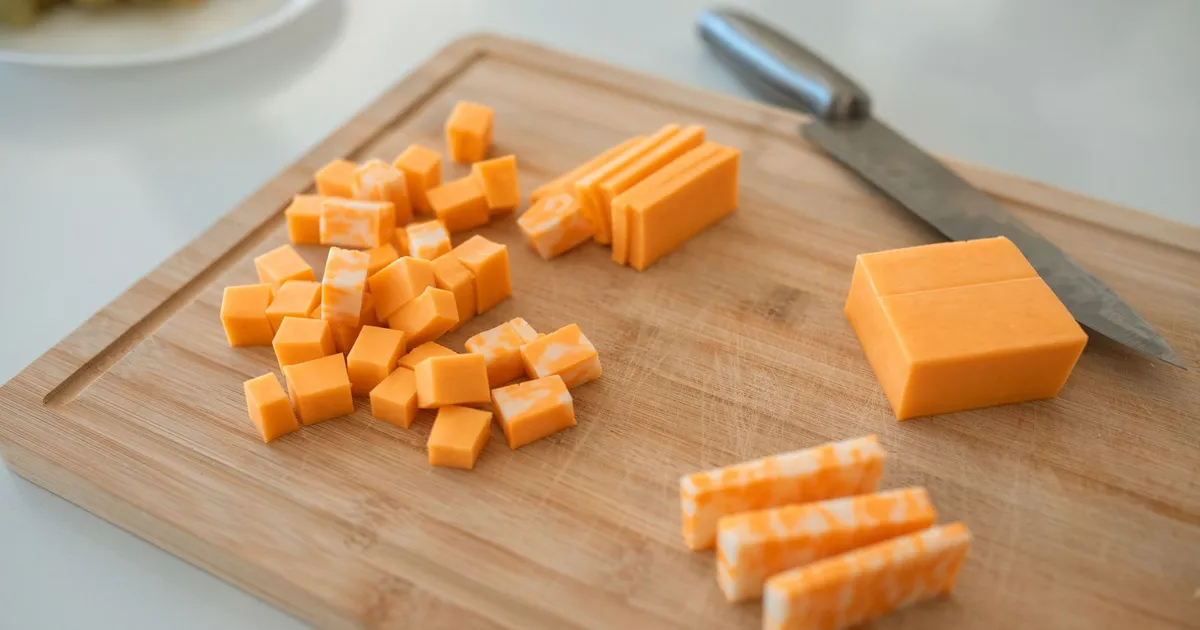
Where these times come from. USDA FoodKeeper has no entry named "cheddar cheese". The 2 kinds on this page are the USDA entries that cover cheddar cheese, copied without change from Cheese. Each row in the table is one USDA entry; pick the one that matches what you have.
block
No guideline
6 months
from the package date; after opening: 3 to 4 weeks
6 months
best quality within
All kinds of cheddar cheese, side by side
| Kind | Pantry | Fridge | After opening | Freezer |
|---|---|---|---|---|
| block | no guideline | 6 months | 3 to 4 weeks | 6 months |
| shredded | no guideline | 1 month | no guideline | 3 to 4 months |
No guideline: USDA gives no time for that place, usually because the food is not stored that way.
How to tell cheddar cheese has gone bad
- Hard cheese such as cheddar, Swiss or block parmesan: cut at least 1 inch (2.5 cm) around and below the mould spot, keep the knife out of the mould, and re-cover the cheese in fresh wrap. The rest is fine to eat.
- Soft cheese such as brie, goat cheese or cream cheese: any mould means the whole piece goes out, because mould spreads below the surface of moist foods.
- Shredded, crumbled or sliced cheese of any type with mould goes out too. Spores travel through the pack.
- Cheeses made with mould, such as blue, Gorgonzola and Roquefort, are fine as sold. Mould that is not part of the cheese follows the same rule: trim hard cheese, discard soft cheese.
Sources: Molds on Food: Are They Dangerous? (USDA FSIS). The times on this page are quality guidelines, not safety limits; food that shows these signs goes out regardless of the date.
Storage habits that make the difference
Keep dairy and eggs in the coldest part of the fridge, not the door, at 40 F (4 C) or below. Store eggs in their original carton to protect them and track the date. Reseal cheese tightly in wax paper or a container, and keep milk capped between pours.
More in dairy products & eggs
Source: USDA FSIS FoodKeeper dataset (public domain). Times assume a fridge at 40 F (4 C) and a freezer at 0 F (-18 C). How we decode the data.